


We’ve all been there: Saturday morning arrives, the sun is shining through the windows, and instead of enjoying a coffee, you’re staring at a four-page cleaning checklist. The “all-or-nothing” approach to house cleaning is the fastest way to burnout. But here is a secret from the industry: professional cleaners don’t actually clean everything every time they visit a home.
In fact, over-cleaning certain areas can actually cause damage, while others simply don’t accumulate enough grime to justify the effort. If you want to reclaim your weekend and maintain a home that looks spotless without the stress, it’s time to adopt the “Clean Smarter, Not Harder” philosophy.
Here are the six spots pros always skip during their regular routines, and how you can manage them instead.
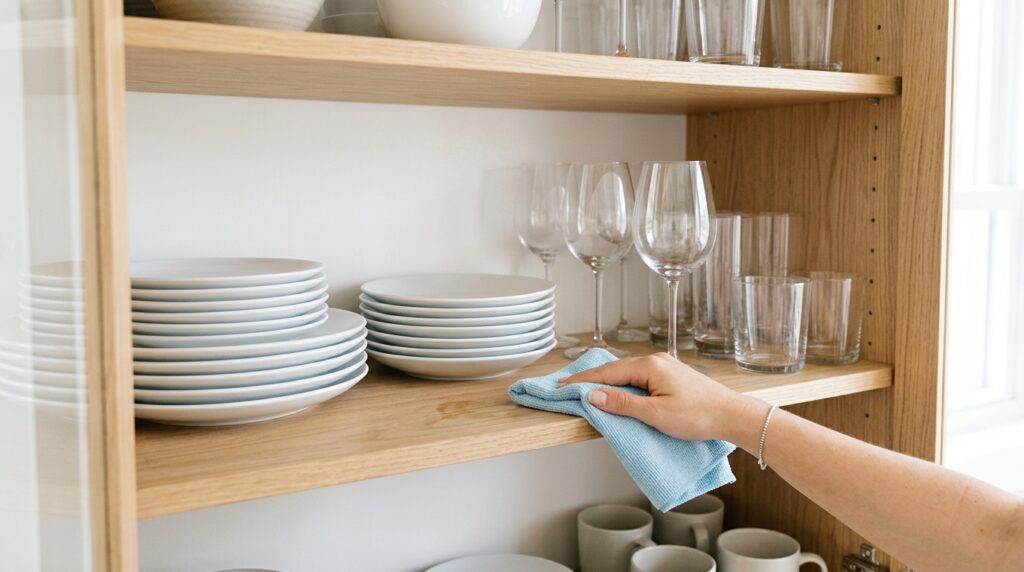
1. The Deep Interior of Kitchen Cabinets
The kitchen is arguably the most labor-intensive room in the house. Between sanitizing counters and scrubbing the stovetop, it’s easy to feel like you need to empty every cupboard and wipe the shelves weekly.
The Pro Secret: Unless there has been a major spill (like a leaky olive oil bottle or a flour explosion), professionals skip the cabinet interiors during regular visits.
Why you should skip it: Constant unloading and reloading of dishes increases the risk of breakage. Instead of a weekly deep-clean, Galia Ivanova suggests a quick surface wipe-down for visible crumbs. Save the “emptying of the cabinets” for a biannual organization session.
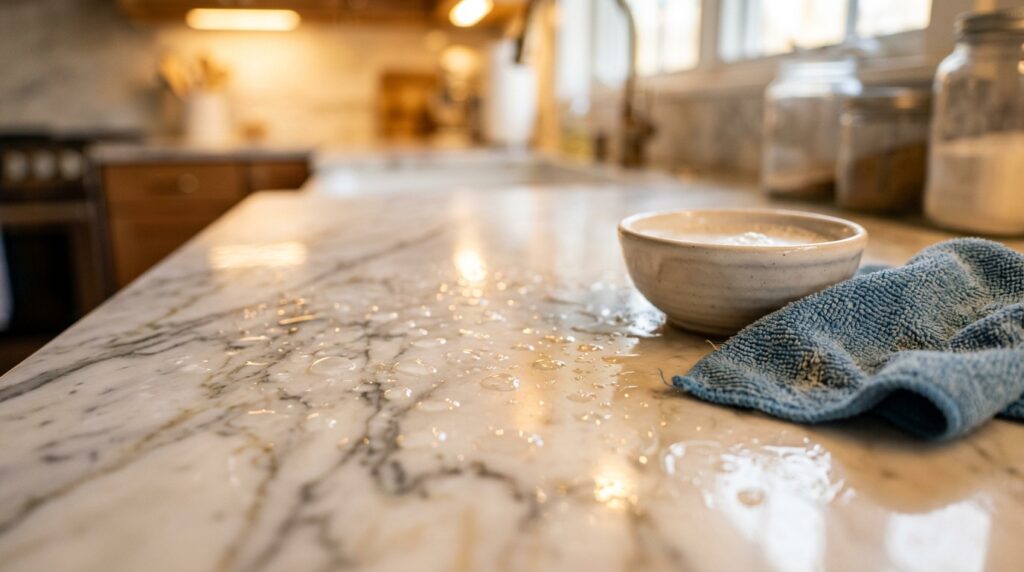
2. Aggressive Scrubbing of Granite and Marble
Natural stone surfaces like granite and marble are the crown jewels of many modern kitchens. Because they are expensive, homeowners often over-scrub them with harsh chemicals to keep them “perfect.”
The Pro Secret: Real pros are incredibly gentle with stone. Alessandro Gazzo warns that using abrasive cleaners or scrubbing too hard can actually strip the sealant and damage the stone.
Why you should skip it: Stone is porous. Over-cleaning with the wrong products leads to dullness. Stick to a specialized stone cleaner or simple soapy water. If it looks clean, it probably is.

3. Indoor Light Fixtures (Beyond Dusting)
It’s tempting to take down every glass globe and chandelier piece to soak them in the sink. However, unless you live in a home where people are frequently touching the ceiling, these items stay relatively “clean” in a biological sense.
The Pro Secret: Pros prioritize “high-touch” areas—things your hands actually touch, like light switches. For the fixtures themselves, a quick pass with a long-handled duster or a vacuum attachment is all that’s required.
Why you should skip it: The risk of dropping a fixture or improperly rewiring something isn’t worth the marginal difference in shine. Focus on the dust build-up and move on.
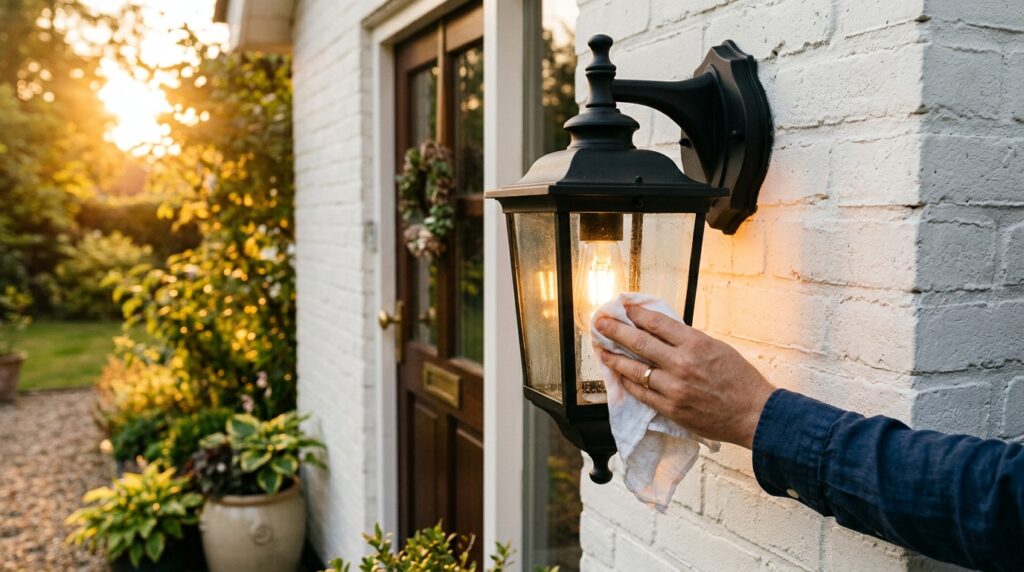
4. Outdoor Light Fixtures
Much like their indoor counterparts, outdoor lights are often victims of over-cleaning. Homeowners often try to power-wash them or use heavy glass cleaners every week.
The Pro Secret: Nature is going to happen. Dust, pollen, and the occasional spider web are inevitable. Pros recommend a simple wipe with a damp cloth every couple of months.
Why you should skip it: Harsh chemicals can weather the finish of outdoor metal fixtures, making them look aged prematurely. A quick sweep of the entryway is a better use of your time.
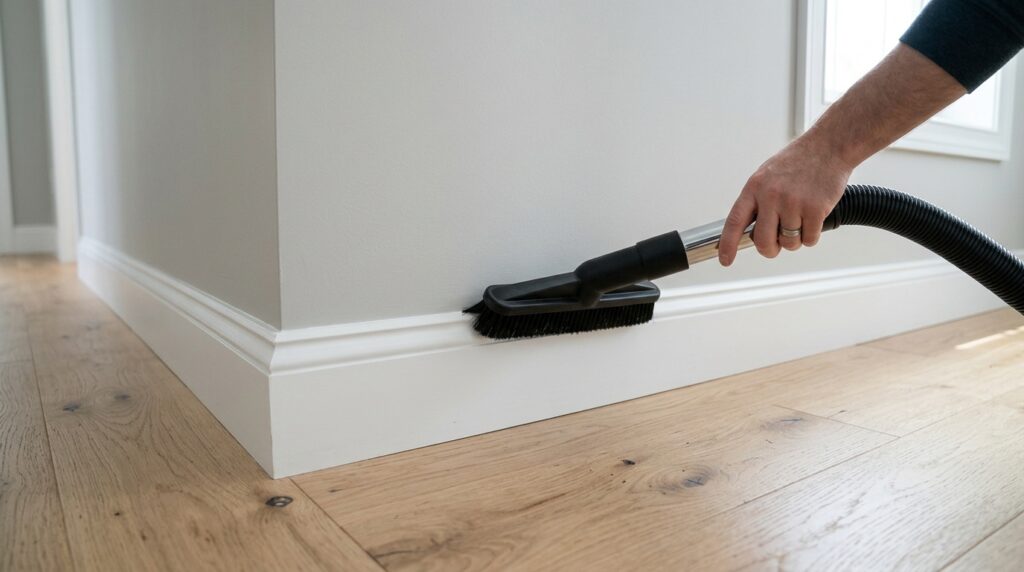
5. Aggressive Baseboard Scrubbing
Baseboards are notorious for collecting “fuzz,” but the “Cinderella-style” hands-and-knees scrubbing with heavy chemicals is a time-waster.
The Pro Secret: Over-cleaning baseboards can actually wear down the paint or finish. Professionals usually just run a vacuum brush over them or a dry microfiber cloth to pick up dust.
Why you should skip it: Moving furniture every week to reach every inch of trim can dent your walls and scratch your floors. Unless there’s a visible scuff or spill, a light dusting is plenty.
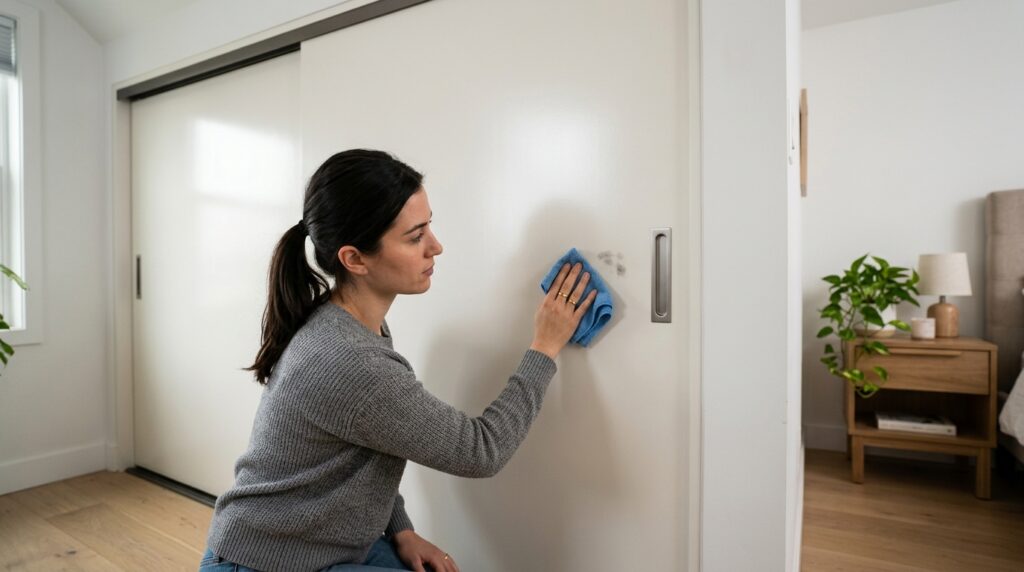
6. Full Wipe-Downs of Closet Doors
If you have sliding glass closet doors or high-gloss finishes, you might feel the urge to Windex the entire surface every time you see a single fingerprint.
The Pro Secret: Don’t clean the whole door for a tiny smudge. Pros use “spot cleaning” tactics.
Why you should skip it: Cleaning the entire surface area of every closet door in a home can add 20–30 minutes to your routine. Spot check only where hands actually touch (near the handles or edges) and leave the rest alone.