

Category: Cleaning & Sustainability
We’ve all been there: staring at a pair of jeans that has finally succumbed to the “inner thigh rub,” a stubborn bleach stain, or a zipper that refuses to stay up. Your first instinct might be to toss them in the bin, but before you do, consider this: it takes roughly 1,800 gallons of water to grow enough cotton for just one pair of jeans. Denim is one of the most resource-heavy fabrics on the planet, but it’s also one of the most durable.
In the world of professional cleaning and home organization, denim is a “super-fabric.” Its tight weave and high cotton content make it incredibly absorbent, abrasive enough to scrub, and tough enough to protect.
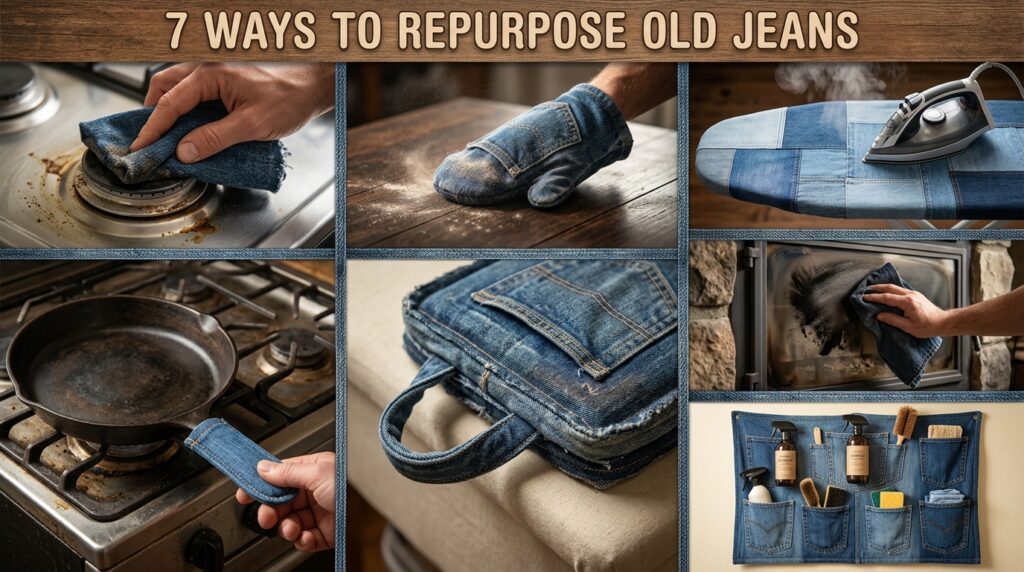
If you’re ready to turn your “trash” into functional cleaning tools, here are 7 professional ways to repurpose old jeans that will save you money and reduce your environmental footprint.
1. The Heavy-Duty “Scrubby” Cleaning Cloth
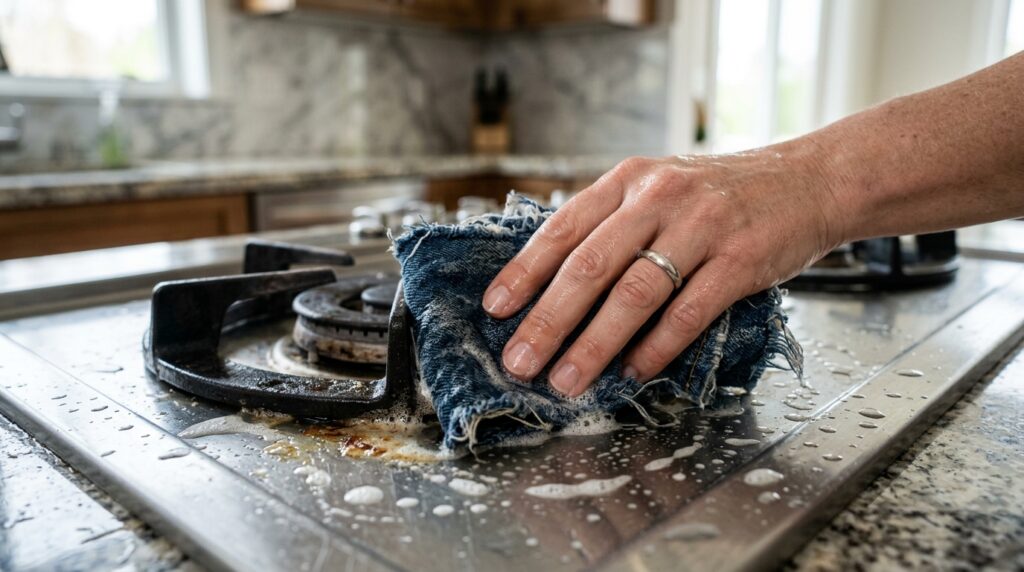
Forget flimsy microfiber cloths that melt under high heat or tear on rough surfaces. Denim is the ultimate heavy-duty scrubber.
- Why It Works: The diagonal ribbing of denim (called the “twill”) acts as a built-in abrasive. It’s perfect for removing dried-on food from stovetops or soap scum from bathtub porcelain without scratching the finish.
- How to Make It: Cut the legs of the jeans into 8×8 inch squares. You don’t even need to hem them; the slight fraying actually helps trap dust.
- Pro Tip: Use these specifically for “high-friction” cleaning areas like the oven interior or the tracks of sliding glass doors.
2. The DIY “Denim Dusting” Mitt
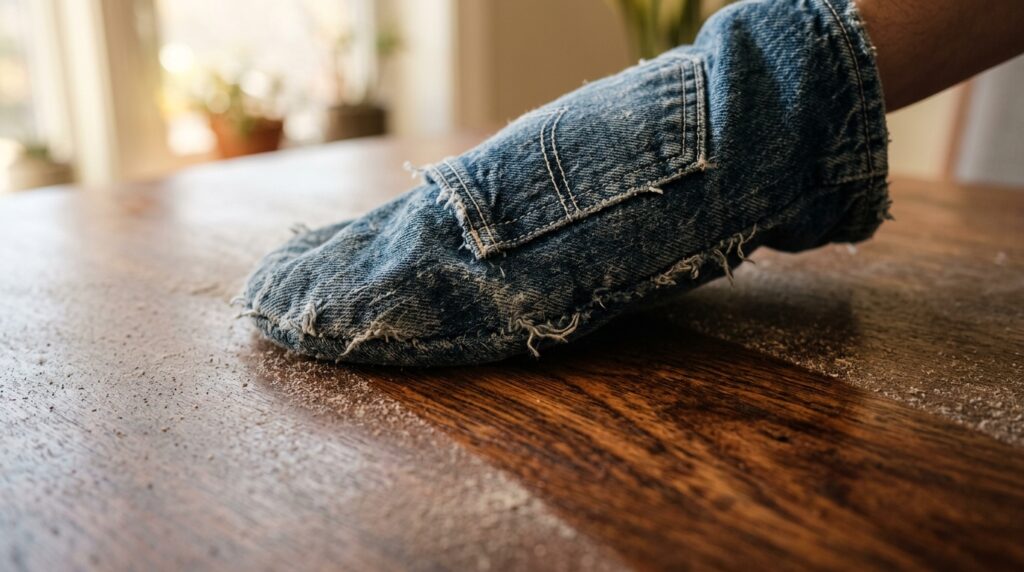
Old jeans are surprisingly good at trapping pet hair and heavy dust. By turning a pocket or a sleeve into a mitt, you get better leverage for cleaning intricate areas.
- Why It Works: The thick fibers of denim create a slight static charge when rubbed against wood or plastic, pulling dust away rather than just pushing it around.
- How to Make It: Cut out the back pocket, leaving an extra inch of fabric around the sides. Sew it onto a soft flannel backing, or simply use a leg section as a sleeve for your arm.
- Pro Tip: Spritz the denim with a tiny bit of linseed oil or a DIY beeswax spray. The denim will hold the treatment and polish your wooden furniture to a high shine.
3. The Industrial-Strength Ironing Board Cover
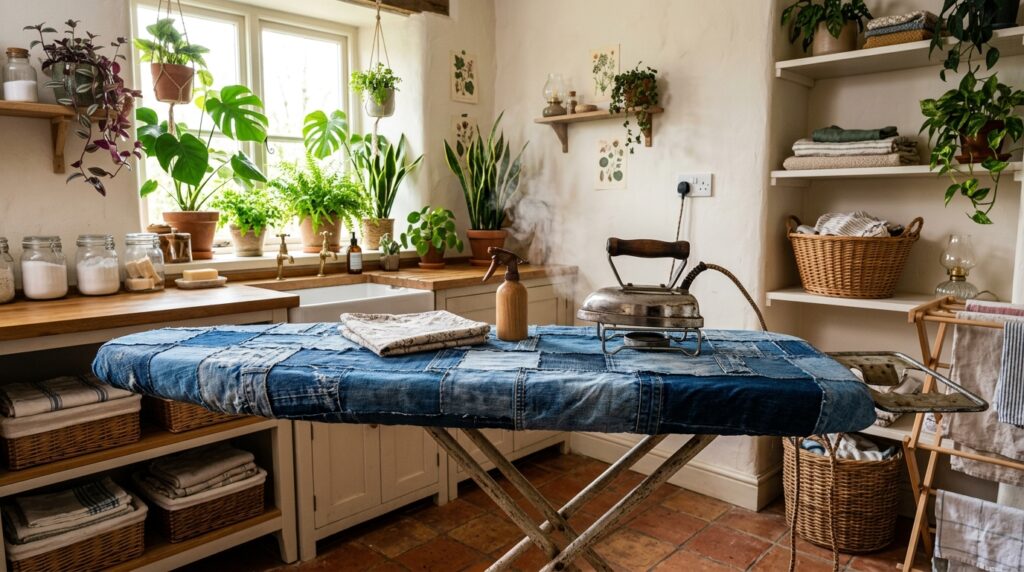
Most store-bought ironing board covers are thin and wear out within a year. Denim, designed to withstand heat and friction, is the perfect replacement.
- Why It Works: Denim can handle the highest heat settings of an iron ($180\text{°C}$ and above) without scorching. Its thickness provides a stable, flat surface that makes pressing seams much easier.
- How to Make It: Seam-rip the legs of two pairs of jeans and sew them together into a large flat sheet. Trace your ironing board, add two inches for the overlap, and use a drawstring to secure it.
- Pro Tip: Use the “wrong side” (the lighter, softer underside) of the denim facing up. It’s smoother and less likely to leave a “twill pattern” on delicate silk garments.
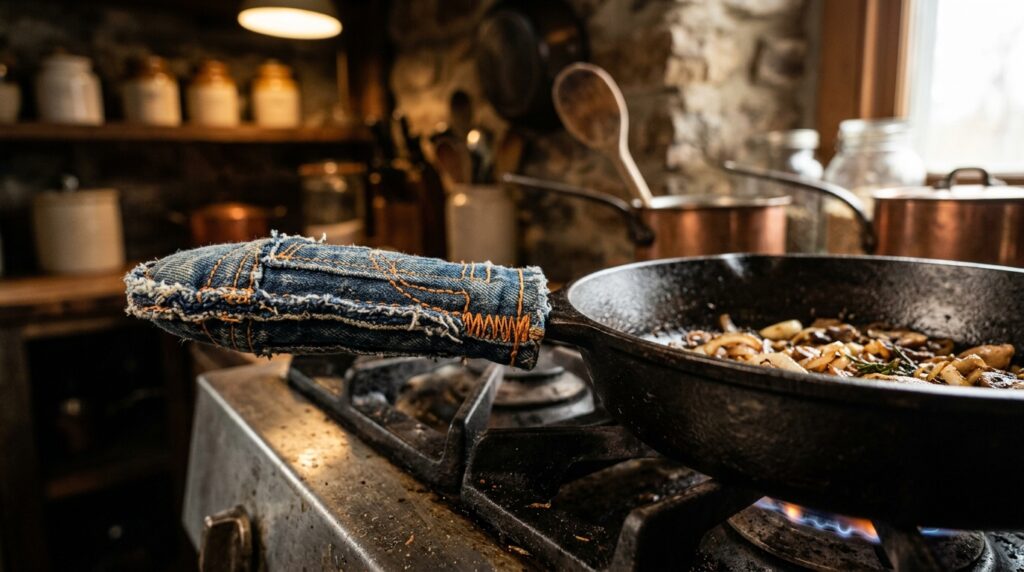
4. The “No-Slip” Cast Iron Handle Protector
If you’re a fan of cast iron cooking, you know the struggle of the hot handle. While silicone covers exist, they often slip. Denim provides a grip that doesn’t budge.
- Why It Works: Layered denim acts as an excellent thermal insulator.
- How to Make It: Layer 4-5 squares of denim and sew them into a small “sleeve” that fits snugly over your skillet handle.
- Pro Tip: Since denim is 100% cotton, it won’t melt if it accidentally touches the heating element—unlike synthetic pot holders.
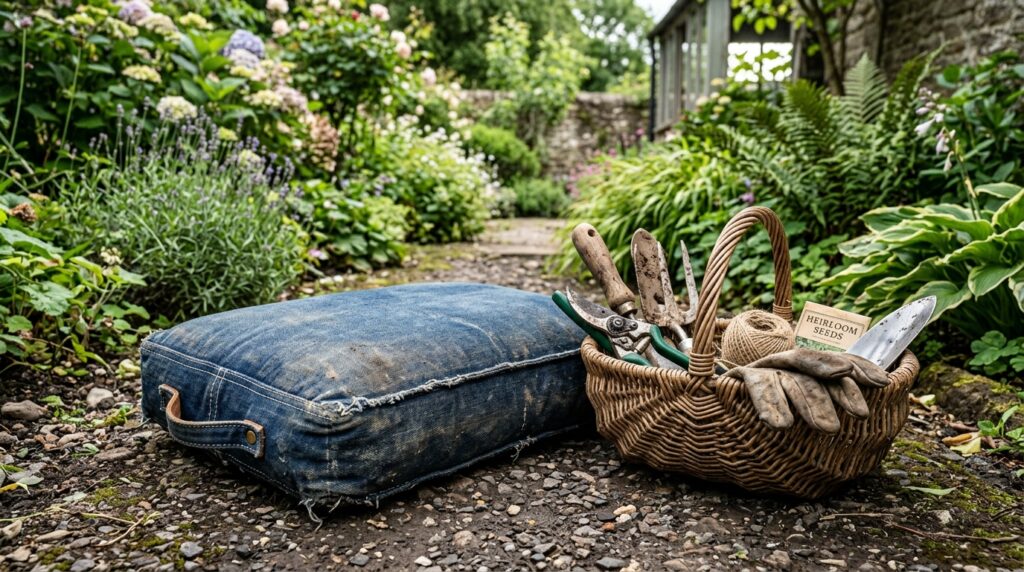
5. The Durable Garden (or Cleaning) Kneeling Pad
Cleaning baseboards or scrubbing floors is a nightmare for your knees. Most foam pads flatten out over time, but denim-encased rags do not.
- Why It Works: Denim is puncture-resistant. If you’re cleaning a garage floor or gardening in the dirt, denim won’t snag on concrete or thorns.
- How to Make It: Take the leg of a wide-cut jean, stuff it with other fabric scraps (perhaps the leftover scraps from your cleaning cloths!), and sew both ends shut.
- Pro Tip: Add a small loop of denim to the corner so you can hang it on your cleaning cart or garden pegboard.
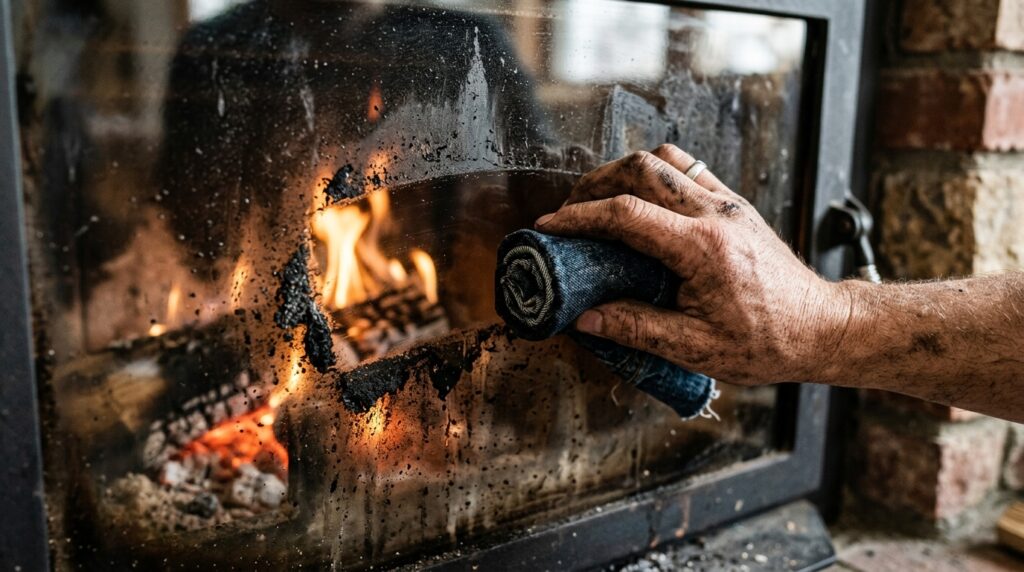
6. The Denim “Soot” Sponge for Fireplaces
Cleaning a fireplace or a charcoal grill is a messy job that ruins standard sponges instantly.
- Why It Works: Denim is tough enough to be washed in hot, bleached water multiple times without disintegrating.
- How to Make It: Use the thickest part of the denim (the waistband or the seams) to create a small, tight bundle.
- Pro Tip: Dip the damp denim in a little bit of leftover wood ash. The mild alkalinity of the ash combined with the denim’s texture creates a natural abrasive that removes soot from glass fireplace doors like magic.
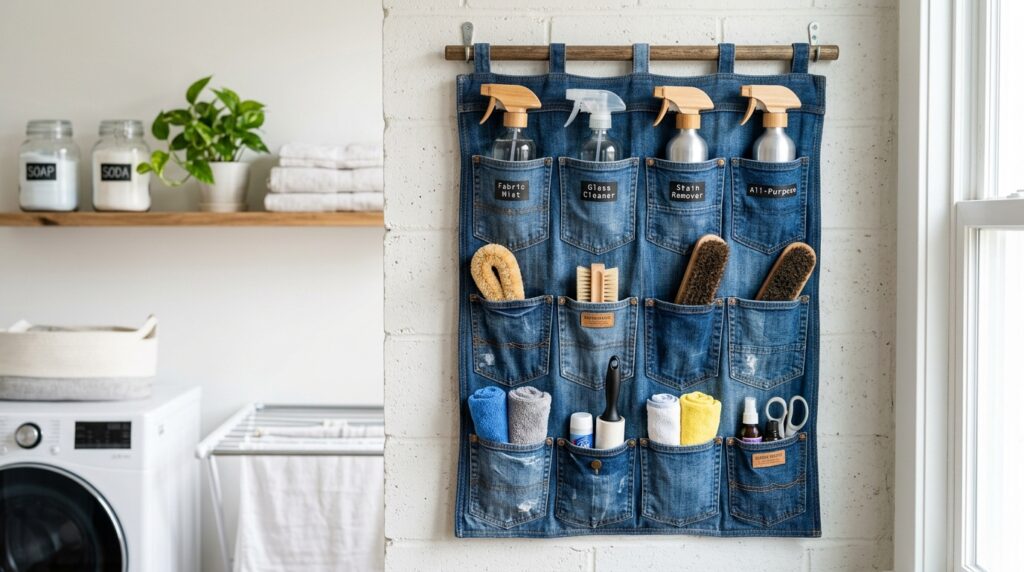
7. The Heavy-Duty Tool & Cleaning Supply Organizer
Denim pockets were literally designed to hold heavy metal tools. Why not use them to organize your cleaning sprays and brushes?
- Why It Works: Denim doesn’t sag under the weight of full spray bottles.
- How to Make It: Cut the back panel of several pairs of jeans (pockets included) and sew them onto a sturdy canvas backing. Hang it on the back of your pantry or laundry room door.
- Pro Tip: Use the smaller “coin pocket” (the tiny one inside the front pocket) to hold extra vacuum attachments or scrub brushes.